
Why Nitric Oxide Declines After 40 (and Why It Matters)
By Dr. Debra Durst, MD – Founder, RevitalyzeMD
Why Does Nitric Oxide Decline After Age 40, and Why Does It Matter?
Most people who’ve heard of nitric oxide know it from the gym — it’s the molecule behind those pre-workout “pump” supplements. At RevitalyzeMD in Knoxville, we think about nitric oxide very differently: as a genuinely important marker of vascular health that affects far more than muscle performance, and one that changes significantly as we age.
Quick Answer: Nitric oxide is a molecule the body produces to relax blood vessels and improve blood flow, with effects on cardiovascular health, blood pressure, erectile function, and more. Production declines notably after age 40, largely because the enzyme responsible for converting amino acids into nitric oxide becomes less efficient — a decline that can be measured and, to some degree, addressed through diet, lifestyle, and targeted supplementation.
What Is Nitric Oxide, and Where Does It Come From?
Nitric oxide is a signaling molecule the body produces to relax and dilate blood vessels, improving blood flow throughout the body. It comes from two main sources:
- Amino acids — primarily L-arginine and L-citrulline, which the body converts into nitric oxide using a specific enzyme.
- Dietary nitrates — found in foods like spinach, lettuce, celery, and beets, which the body can convert into nitric oxide through a separate pathway.
Nitric oxide’s importance to cardiovascular health isn’t a fringe idea — it was significant enough that the 1998 Nobel Prize in Physiology or Medicine was awarded to three researchers (Robert Furchgott, Louis Ignarro, and Ferid Murad) specifically for discovering nitric oxide’s role as a signaling molecule in the cardiovascular system.
Why Does Production Decline With Age?
This is genuinely one of the more underappreciated aspects of aging and vascular health:
- Starting notably around age 40, the enzyme responsible for converting amino acids into nitric oxide becomes less efficient — sometimes described as the enzyme becoming “uncoupled,” where it no longer converts the amino acid precursor into nitric oxide as effectively. (Editorial note: this enzyme is generally referred to in vascular biology as eNOS, or endothelial nitric oxide synthase — we’ve added this specific term for clarity, but please confirm this matches what was intended before publishing.)
- Increased free radical activity with age also contributes to this decline, damaging the enzyme’s function further.
- Lifestyle factors compound the problem: inactivity and a diet low in nitrate-rich vegetables both reduce the raw materials and the metabolic activity that support healthy nitric oxide production.
This means younger, active individuals taking amino-acid-based supplements (like the common gym staples L-arginine and L-citrulline) may see good results, while someone over 40 taking the exact same supplement may see far less benefit — not because the supplement doesn’t work, but because the conversion process itself has become less efficient.
What Does Nitric Oxide Actually Do in the Body?
Because nitric oxide relaxes blood vessels and improves blood flow, its effects reach far beyond any single organ:
-
- Cardiovascular health — supporting healthy blood pressure and reducing plaque buildup risk in blood vessels
- Erectile function — nitric oxide is directly responsible for the vessel relaxation that allows blood to fill the erectile chambers of the penis
- Exercise performance and muscle blood flow — the effect most commonly associated with nitric oxide supplements
- Brain and organ blood flow more broadly, since improved circulation benefits essentially every tissue in the body
- Possible relevance to insulin sensitivity — some early research has explored this connection, though this remains a less established area that needs further study
How Nitric Oxide Levels Can Be Tested and Supported
One of the more useful developments in this space is the ability to actually measure nitric oxide status rather than assume it.
-
- Saliva-based test strips can provide an objective read on nitrate/nitric oxide levels, allowing a before-and-after comparison after taking a supplement.
- In our own informal testing, individuals who assumed they were doing “all the right things” — eating well, taking L-arginine — were sometimes surprised to test low on these strips. This mirrors a pattern we see constantly with vitamin D testing: people assume supplementation is working, but objective testing often tells a different story.
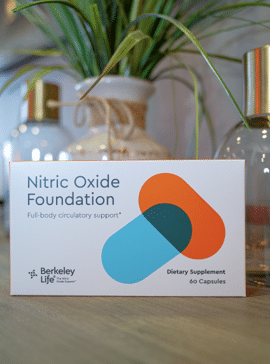
- We currently use a specific plant-based nitrate supplement, Berkeley Life Professional, that comes packaged with these test strips. According to the manufacturer, two capsules are formulated to be roughly bioequivalent to the nitrate content of about 5 ounces of spinach and 7 ounces of beets — a comparison worth noting is sourced from the manufacturer rather than independently tested by us. (Editorial note: please verify this specific bioequivalence figure with the manufacturer before publishing.)
- We look for supplement companies that back their products with real scientific review — for example, a company with an actual medical advisory board reviewing the underlying research is a meaningfully different signal of quality than typical supplement marketing.
Why This Matters for Men Using ED Medications
This connects directly to a common complaint we hear: “my ED medication used to work, and now it doesn’t.” PDE5 inhibitors like Viagra and Cialis work by preventing the breakdown of nitric oxide’s effects — but if the body isn’t producing enough nitric oxide in the first place, there’s less for the medication to work with. Addressing the underlying nitric oxide supply can sometimes restore effectiveness to a medication that seemed to have stopped working, and in some cases allows for a lower, better-tolerated medication dose. We’ve covered this specific connection in more detail in a related post.
Safety Considerations
Nitric oxide-supporting supplements are generally well tolerated, with a few points worth knowing:
-
- Very high doses of L-arginine (upwards of 10 grams) combined with a nitrate supplement can cause GI upset in some people.
- Beets can harmlessly change the color of urine or stool. However, if you notice true red or bloody stool that isn’t clearly explained by beet intake, that’s a separate concern worth medical attention, not something to assume is diet-related.
- Leafy greens are high in vitamin K, which can affect the levels of certain blood thinners like warfarin — this is a vitamin K interaction rather than a nitric oxide-specific one, but it’s worth discussing with your physician if you’re on an anticoagulant and significantly increasing your intake of greens or a related supplement.
When to See a Physician
- You have high blood pressure or another cardiovascular risk factor and want to understand whether nitric oxide status is relevant to your care
- Your ED medication seems less effective than it used to be
- You want objective testing rather than assuming your current supplement regimen is working
- You’re on blood thinners and want guidance before making significant dietary or supplement changes
Frequently Asked Questions
Why does nitric oxide production decline with age?
Starting notably around age 40, the enzyme responsible for converting amino acids into nitric oxide becomes less efficient, compounded by increased free radical activity and often reduced physical activity and dietary nitrate intake.
Can I get enough nitric oxide from diet alone?
It’s possible through nitrate-rich foods like spinach, beets, and celery, but many people don’t consistently eat enough of these foods to meaningfully impact their levels — objective testing can clarify whether your current diet or supplement routine is actually working.
Is nitric oxide only relevant for erectile function?
No — it plays a role in cardiovascular health, blood pressure, exercise performance, and overall blood flow throughout the body, in addition to its well-known role in erectile function.
How can I test my nitric oxide levels?
Saliva-based test strips are available that provide an objective measurement, often paired with a nitrate-based supplement so you can compare levels before and after use.
Are nitric oxide supplements safe?
Generally, yes, for most people. Very high combined doses of L-arginine can cause GI upset, and those on blood thinners should discuss significant dietary or supplement changes involving leafy greens with their physician due to vitamin K content.
Can nitric oxide supplementation help my ED medication work better?
For some patients, yes — since these medications depend on nitric oxide being present to work, addressing an underlying nitric oxide deficiency can restore or improve their effectiveness.
The Takeaway
- Nitric oxide relaxes blood vessels and supports blood flow throughout the body — not just to the penis.
- Production declines meaningfully after about age 40, due to reduced enzyme efficiency, free radical activity, and lifestyle factors.
- Objective testing can reveal whether your current diet or supplement routine is actually raising your levels.
- Addressing nitric oxide status can improve cardiovascular health and, for some men, restore effectiveness to ED medications that seemed to stop working.
- Supplementation is generally safe, with a few considerations for those on blood thinners or taking very high doses of certain amino acids.
The Takeaway
If you’re in Knoxville or anywhere across East Tennessee and you want to understand your vascular health — including objective nitric oxide testing — RevitalyzeMD can help you find out where you actually stand rather than assuming.
Source: RevMD Podcast, episode featuring Dr. Debra Durst and Farideh Golembiewski, FNP, RevitalyzeMD. [Episode date not specified in source material.]